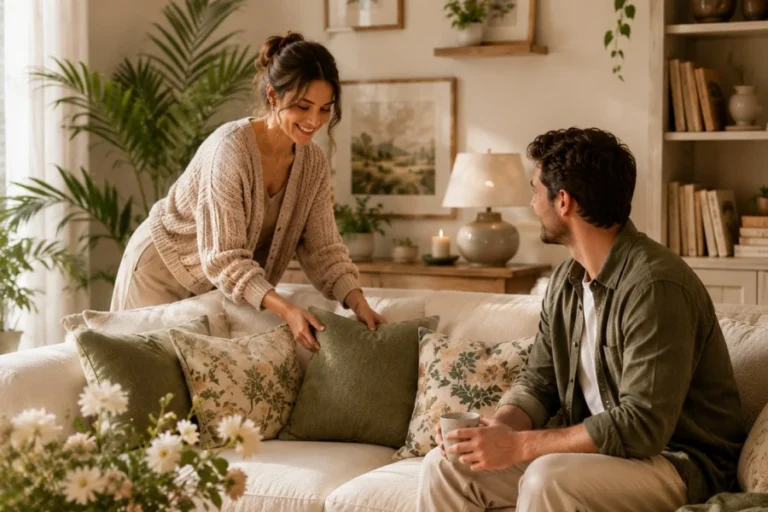
Green living room accents can make a space feel fresh, grounded, and personal when they belong to a clear system. Without that system, they start to look like random pops. One pillow feels botanical. One plant feels lonely. One piece of art introduces a green that nothing else supports. The room may have good pieces, yet the color story feels unfinished. A polished approach begins by choosing the right green family and the right amount of visual weight. Then textiles, plants, art, and objects can work together. The result feels grown-up, flexible, and connected to what you already own.
Why Green Living Room Accents Need a Clear Family
Green has many personalities. Olive feels grounded. Sage feels soft. Forest feels rich. Bright botanical green feels lively. Mixing them without direction can make a room feel busy. Choose one main family before buying anything new. Then compare it with your sofa, rug, flooring, curtains, and wall color. The right green should strengthen the room, not fight it. A balanced green accent plan helps make that choice practical. Once the family is clear, every new accent has a filter. The room starts looking intentional quickly.
Green Living Room Accents Should Carry the Right Weight
Visual weight determines how much attention green receives. A velvet chair carries more weight than a small vase. A large art print carries more weight than a plant on a shelf. Decide whether green should whisper, support, or lead. In neutral rooms, small accents may be enough. In rooms with strong wood or dark furniture, deeper green may hold its own better. Balance also depends on repetition. One green object can feel accidental. Three thoughtful moments can feel designed. Weight keeps the color from scattering. It also helps the room avoid an overly themed look.
Textiles and Plants Create Structure
Textiles are usually the easiest way to introduce green. Pillows, throws, curtains, and rugs can shift mood without permanent commitment. Plants add structure because they bring green through form as well as color. The trick is making textiles and plants speak the same language. A sage pillow may not connect with a glossy tropical plant unless another element bridges them. Use art, ceramics, or a patterned fabric to create that bridge. The polished color placement approach keeps each piece connected. Green looks calmer when it repeats through material, shape, and tone.
Green Living Room Accents Feel Polished Through Repetition
Repetition makes an accent color look chosen. It does not mean duplicating the same shade everywhere. Instead, repeat the idea of green in varied forms. A pillow, plant, artwork detail, and ceramic bowl can create a complete story. Keep distances balanced so the eye travels around the room. Avoid clustering every green object on one shelf. Spread the color near seating, surfaces, and vertical moments. This makes the room feel composed. Materials matter too. Pair green with wood, woven texture, linen, aged metal, or stone for depth. The color feels more grown-up when it has thoughtful companions.
Seasonal Adjustments Keep Color Flexible
Green can shift through the year without losing balance. In spring, it may feel fresh with cream, flowers, and lighter fabrics. In summer, it can lean botanical with plants and airy texture. In fall, olive and moss can pair beautifully with wood, clay, and amber light. In winter, forest green can feel rich beside wool and brass. Small changes keep the accent system alive. They also prevent the room from feeling stuck. Avoid replacing everything each season. Rotate supporting tones instead. A flexible green story saves money and keeps the living room visually steady.
Let Green Living Room Accents Support the Whole Room
The best accent color supports the room rather than demanding attention. Step back and ask what green is doing. Does it warm the sofa. Does it connect plants to art. Does it soften a hard corner. Does it make the room feel more personal. If the answer is unclear, edit before adding more. AI palette tests can help compare green options against existing pieces. The green accent styling PDF gives those decisions a clear process. With a few intentional repetitions, the room feels fresher. Green becomes part of the atmosphere, not a scattered decoration.